
Boxing Headguard: Types, Sizing and When It Is Mandatory
-
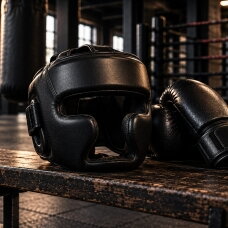
In sparring, a boxing headguard protects the eyebrows, cheeks, ears and nose from cuts and bruises, so everyone who starts sparring needs one, and so do most kids. This guide explains how headguard types differ, how to choose the size and when a headguard is mandatory in competition.
Short answer
- Sparring and beginners – a headguard with cheek protection.
- To protect the nose – a headguard with a nose bar.
- Kids and Kyokushin karate – a headguard with a face bar or a clear plastic face shield.
- Competition – a competition headguard that meets your federation's rules.
- Size – by head circumference, measured just above the eyebrows.
Types of boxing headguards
Type Who it suits In our range With cheek protection (training) Sparring, beginners Royal leather training headguard, Hitman Elite, Venum Challenger 2.0, King Pro, Twins With nose bar Frequent sparring, protecting the nose Royal leather headguard with nose bar, Hitman Challenger, Top King Pro Training With face bar or plastic face shield Kids, Kyokushin and Kudo Royal with metal face bar, Royal with plastic shield, Royal Kudo Competition Amateur boxing and kickboxing competition Royal Competition 3.0, Adidas World Boxing Competition, Fairtex competition models Karate Karate training Royal karate headguard Headguards from our own brand Royal cost 50–75 €, Hitman 60–85 €, and top-class Fairtex, Twins and Adidas headguards 120–160 €.
Which headguard to choose
Headguards from our own brand Royal are made of genuine leather, with an adjustable velcro strap at the back and extra padding on top: the Royal leather training headguard, the Royal headguard with nose bar, and models with a metal face bar or a clear plastic face shield. For competition there is the Royal Competition 3.0 headguard in red and blue.
Our premium own brand is Hitman: the Hitman Elite is made of synthetic leather with multi-layer padding and protects the chin as well as the head, the Hitman Challenger has a nose bar, and the Hitman Elite Evo is made of genuine leather. From other brands we carry Venum, Fairtex and Twins headguards.
How to choose the size
Headguard size is chosen by head circumference. Wrap a measuring tape around your head just above the eyebrows and over the widest part of the back of the head. Hitman headguard sizes:
Size Head circumference S 48–52 cm M 53–56 cm L 57–58 cm XL 59–61 cm Other brands' charts differ slightly, so always check the sizes of the specific model. A headguard that fits does not move when you shake your head, does not press on your ears and does not block your eyes. With the straps fastened, look to the sides: your field of view should stay wide.
When a headguard is mandatory
In Olympic boxing, now run by World Boxing, headguards are mandatory for kids, juniors and youth. Elite men have competed without headguards since 2013, while the rules for women depend on the organisation. World Boxing is considering making headguards mandatory for everyone again, so the rules may change. In kickboxing (WAKO), a headguard is mandatory in all fighting disciplines. In amateur competition the headguard colour often has to match your corner, red or blue. Always check your federation's rules before competing.
Headguards for kids
For kids, choose a headguard with cheek protection or a face bar so the face is better protected. The Royal leather training headguard in size S works well, and for karate training there is the Royal karate headguard. All models are in kids' headguards.
Care
- After training, air-dry the headguard; do not leave it at the bottom of a closed bag.
- Wipe the inside with a damp cloth so sweat does not soak into the padding.
- Treat genuine leather with a leather care product from time to time so it does not crack.
- Antibacterial fresheners reduce odour.
Frequently asked questions
Does a headguard prevent concussion?
A headguard reduces the risk of cuts, bruises and ear injuries, but it does not fully protect against concussion. Technique and sensible sparring intensity matter most.When should I buy a headguard?
When your coach says it is time to spar. You do not need one for the first sessions without partner contact.Can I spar in a competition headguard?
You can, but a training headguard with cheek or nose protection protects more, so it is more comfortable for sparring.How do I stop the headguard slipping over my eyes?
Choose the exact size, tighten the rear velcro firmly and, if there are any, the top laces.Do I need a mouthguard with a headguard?
Yes. A headguard does not protect your teeth, so always wear a mouthguard when sparring.It is best to try a headguard on at our store in Vilnius, Laisvės pr. 125A. All models are in headguards. For what else you will need once you start sparring, see "What You Need for Your First Boxing or Kickboxing Class".
