
Winter Exercises and Hikes: How to Dress in Layers
-
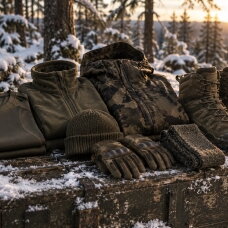
In winter you get coldest not while you are moving but when you stop: a warm, sweaty body cools down fast. That is why for winter exercises and hikes you dress not in one thick garment but in several layers you can take off and put back on. This guide explains the layering system and how to keep your head, hands and feet warm.
Short answer
- First layer – thermal underwear that moves moisture away from the skin. Not cotton.
- Second layer – a fleece that holds warmth.
- Third layer – a jacket and trousers that block wind and snow.
- When you stop – an extra insulated jacket.
- Head, hands and feet – a hat, a neck gaiter, two pairs of gloves, warm socks and insulated insoles.
The layering system
Layer Purpose In our range Base (thermal underwear) Moves moisture away from the skin Helikon Underwear LVL 1 and LVL 2, Mil-Tec Functional Underwear Insulating (fleece) Holds warmth Helikon Alpha Tactical, Classic Army, Patriot, M-Tac Lite Microfleece Shell (jacket, trousers) Protects from wind and moisture Helikon Tramontane, Helikon M65, tactical trousers For stops Extra warmth when standing still Helikon Wolfhound Why not cotton
Cotton soaks up sweat and dries slowly, so a wet cotton T-shirt under your jacket keeps you cold all day. Next to the skin, wear synthetic or merino wool base layers that let moisture evaporate. Helikon Underwear LVL 1 tops with bottoms work well, and for colder weather the thicker LVL 2 or the Mil-Tec underwear set.
Fleece and jacket
The second layer is a fleece, such as the Helikon Alpha Tactical or the thicker double-fleece Helikon Patriot. On top, wear a windproof jacket such as the Helikon Tramontane or the classic M65. When you stop, put on an insulated jacket such as the Helikon Wolfhound, and take it off before you start moving again. All fleeces are in fleeces and hoodies.
Head, hands and feet
An uncovered head and neck lose a lot of heat, so bring a winter hat and a neck gaiter or balaclava. Two pairs of gloves work best for your hands: thin tactical gloves for working and warmer ones for stops. For your feet, choose Lowa 4-Season Pro socks or, for harder frost, Lowa Ice Pro, together with Lowa Cold Weather insoles.
In winter, choose boots with a membrane and leave room for thicker socks: boots that are too tight squeeze the blood vessels, so your feet get cold faster. Our tactical boots guide explains how to choose boots.
What else to bring
- A thermos with hot tea: a hot drink helps you warm up when you stop.
- Spare socks and gloves in a dry bag so they stay dry.
- Snacks: your body burns more energy in the cold.
- A power bank for your phone, because batteries drain faster in the cold.
Frequently asked questions
How many layers do I need?
When moving, two are usually enough: thermal underwear and a light fleece or wind jacket. Put on an insulated jacket when you stop. The key is to take off a layer before you start sweating.How do I avoid sweating on a march?
Start walking slightly underdressed: after 10 minutes your body will warm up. When you get hot, open the zips and take off your hat.Is ski clothing suitable?
For warmth, yes, but it is often bright, noisy and tears quickly in the bushes. Sturdier tactical clothing is better for exercises.How do I dry socks and insoles during an exercise?
In the evening, take the insoles out of your boots and dry your socks in your sleeping bag or under your jacket, close to your body.You can try on all winter clothing at our store in Vilnius, Laisvės pr. 125A. More in tactical clothing.
