
Gi Size Guide: How to Choose a Judo, BJJ or Karate Gi
-
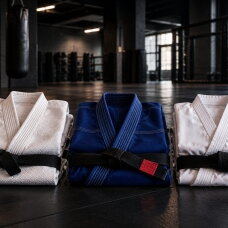
Gi size is one of the most common questions we get from customers: judo gis are sized in centimetres, BJJ gis in letters and numbers, and karate gis also by cut. In this guide we put all the sizing systems into one place, explain how judo, BJJ and karate gis differ, and how to wash a gi so it does not shrink in the first month.
Short answer
- Judo gi size is your height in centimetres: 150, 160, 170, 180 and so on. Kids 110–150 cm.
- BJJ gi is sized A1–A4 for adults and C0–C3 for kids. Half sizes (A2.5, A3.5) are for tall, slim people.
- Karate gi size is height in centimetres, but the fabric is thinner and the cut looser than judo.
- Judo and karate gis are sewn slightly larger than the label, so between two sizes a slim person takes the smaller one and a stocky person the larger. BJJ gis are cut closer to size, so there go up a size.
How judo, BJJ and karate gis differ
A judo gi is the thickest and densest, because it is constantly gripped and used for throws. Standard weight is 450–750 g/m², with wide sleeves and jacket skirts. Competition requires white or blue.
A BJJ gi is narrower with slightly shorter sleeves, so the opponent has less to grab, and the fabric is lighter: 350–550 g/m². The trousers have a drawstring, and various colours and patches are allowed.
A karate gi is the thinnest and lightest, 8–12 oz fabric, because there are no throws in karate and speed matters. A kata gi is heavier and stiffer, a kumite gi light and stretchy.
A gi is not universal: a karate gi in judo training rips at the sleeves within a month, and a thick judo gi in BJJ is too hot and restricts movement.
Judo gi size chart
Size Slim or average build Stocky build Typically for 110 cm 108–116 cm 105–112 cm Kids 4–6 120 cm 117–126 cm 113–122 cm Kids 6–8 130 cm 127–136 cm 123–132 cm Kids 8–10 140 cm 137–146 cm 133–142 cm Kids 10–12 150 cm 147–156 cm 143–152 cm Age 12–14, petite women 160 cm 157–166 cm 153–162 cm Teenagers, women 170 cm 167–176 cm 163–172 cm Most men and women 180 cm 177–186 cm 173–182 cm Taller men 190 cm 187–196 cm 183–192 cm Very tall Judo gis are sewn slightly larger than the label, so look at build as well as height. An example from our store: a slim 145 cm child fits a 140 cm gi, while a stocky 148 cm child needs 150 cm, because a gi only gets wider together with length. For beginners and kids we recommend the Royal judo gi from our own brand and Hayashi Todai (110–150 cm), and for club training and competition the Adidas Club J350. All models are in judo gis.
BJJ gi size chart (A and C sizes)
Size Height Weight C0–C1 (kids) 105–125 cm 18–30 kg C2–C3 (kids) 125–150 cm 30–45 kg A1 160–170 cm 55–70 kg A1.5 168–176 cm 62–75 kg A2 170–180 cm 70–85 kg A2.5 178–186 cm 75–88 kg A3 180–190 cm 85–100 kg A3.5 188–196 cm 90–105 kg A4 190–200 cm 100–115 kg The chart is a guide: every manufacturer cuts slightly differently, so always check that model's size chart on the product page. Take a half size when you are tall but slim: A2.5 is longer than A2 but narrower than A3. Our most popular models: Venum Contender Evo with all half sizes, Venum Contender Evo 2.0, the lightweight Hayabusa Ascend Lightweight for summer and travel, and for kids Venum Contender Kids (C0–C3). See the full range in BJJ gis.
Karate gi: by height and style
A karate gi is sized by height in centimetres like judo, but choose exactly by height, because the fabric is thin and an oversized gi looks like a sack. Beginners and kids are fine with a light 8 oz gi; from green belt it is worth moving to 10–12 oz, which keeps its shape better and gives a louder snap on technique. To start, the light Hayashi Kinsa and Hayashi Heian gis are a good choice, and for competition the WKF-approved Hayashi Tenno Elite and Hayashi Premium Kumite. All models are in the karate gi category.
Which belt length you need
The belt should go twice around the waist and hang about 20–30 cm on each side below the knot. A simple formula: waist circumference in centimetres times two, plus 100 cm. Someone with a 90 cm waist needs a 280 cm belt. BJJ belts use the same A sizes as the gi. Belts by length are in gi belts: Hayashi Budo 240–330 cm for karate and judo, WKF approved belts for competition and Venum BJJ belts.
How to wash a gi without shrinking it
- Wash at 30 °C, inside out, right after training. Sweat is the main cause of smell and stains.
- Do not tumble dry or dry on a radiator: heat shrinks cotton by up to 5 %. Hang dry in the shade.
- If the gi is too big, you can shrink it deliberately with a 60 °C wash, but only once and in small steps.
- Use bleach only on a white judo or karate gi and no more than once a month.
- Own two gis if you train 3 or more times a week, so each one has time to dry.
Frequently asked questions
Can I train BJJ in a judo gi?
For training, yes, many people start that way. In competition a BJJ gi must meet sleeve length and width rules, so there you need a proper BJJ gi.Which size for a child who is growing fast?
For a slim child, by the chart, since a judo gi already runs slightly large; for a stocky child, one size up with the sleeves rolled for the first months. A kids' judo gi usually lasts one season.White or blue gi?
Beginners, white: it suits all training and beginner competitions. Blue is needed only for judo competition from a certain level and in BJJ by club rules.How much does a gi weigh?
A 170 cm judo gi about 1.5–2 kg, a BJJ gi A2 1.2–1.6 kg, a karate gi 0.8–1 kg. Light BJJ models are handier for competitions where you weigh in wearing the gi.Can I try a gi on?
Yes, our store in Vilnius has judo, BJJ and karate gis in a range of sizes. Bring your training t-shirt and you will have your size in five minutes.
